Porcelain Pavers or Bluestone for my Outdoor Project?
Porcelain pavers and natural bluestone are two of the most popular premium materials we install for patios, walkways, pool surrounds, and complete backyard renovations throughout Northern New Jersey.
At RVG Landscape Design, we install porcelain and bluestone throughout Bergen County, Passaic County, Morris County, Essex County, and surrounding Northern NJ communities.
Both materials can create a beautiful outdoor space, but there are major differences in appearance, maintenance, drainage, installation, and long-term performance.
So which is better for a Northern NJ backyard: porcelain pavers or bluestone?
The answer depends on your home, design preferences, budget, and how you plan to use the space.
What Are Porcelain Pavers/Tiles?
Outdoor porcelain pavers are manufactured specifically for exterior applications.
Unlike traditional concrete pavers, porcelain has extremely low water absorption and is highly resistant to stains, moisture, fading, and everyday wear.
Porcelain is available in many colors and textures, including products designed to resemble natural stone, limestone and other premium materials.
For Northern NJ homeowners looking for a modern backyard patio or pool surround, porcelain has become one of our favorite materials.
However, the porcelain itself is only one part of a successful installation.
The system underneath the porcelain is just as important as the material you see on top.
How We Install Porcelain Pavers in Northern NJ
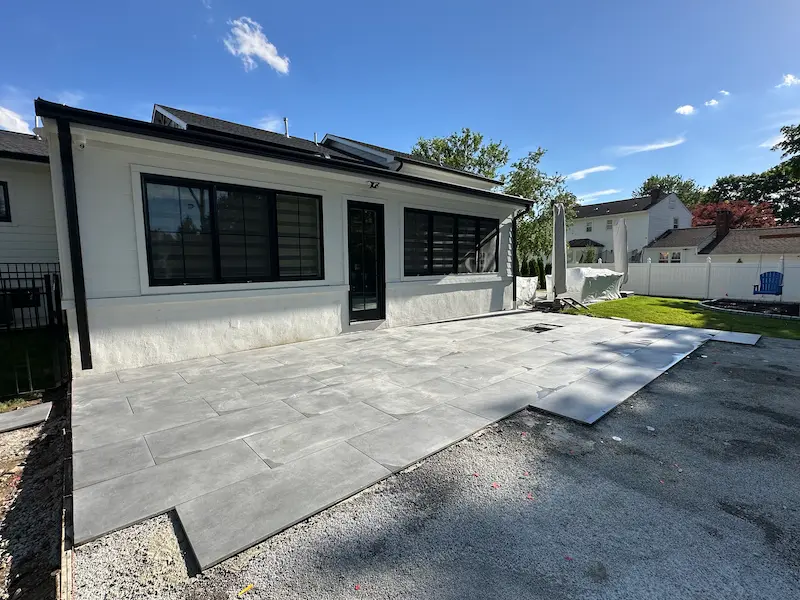
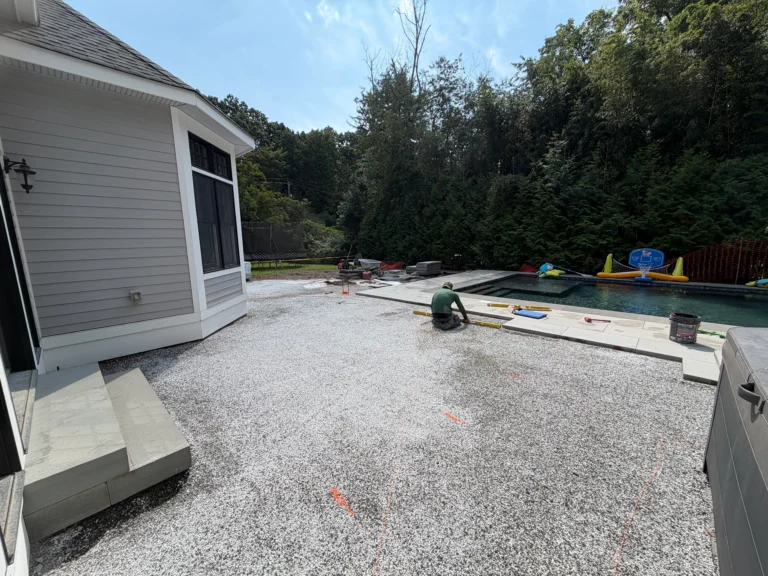
At RVG Landscape Design, our porcelain patios can be installed using an open-graded drainage system combined with a permeable Trass setting system.
Our typical porcelain patio installation includes:
- Proper excavation based on site conditions
- Geotextile stabilization where required
- Approximately 8–10 inches of compacted 3/4-inch clean stone
- 1/4-inch clean chipped stone
- Permeable Trass setting material
- Bonding layer
- Exterior-rated porcelain pavers
- Premium jointing material
- Proper pitch and drainage
Why Do We Use 3/4-Inch Clean Stone?
The foundation of a patio has a major impact on its long-term performance.
We use compacted 3/4-inch clean stone to create a strong, open-graded foundation.
Because clean stone does not contain the same amount of fine particles found in dense recycled materials or stone dust, there are voids between the stones.
These voids allow water to move through the base.
This is especially important in Northern New Jersey, where patios are exposed to heavy rain, snow and repeated freezing and thawing throughout the year.
What Is a Trass System for Porcelain Pavers?
One of the biggest differences between a standard paver patio and our porcelain installation is the setting system.
Porcelain requires specialized installation techniques.
A permeable Trass setting system creates a strong setting layer underneath the porcelain while allowing water to filter through the assembly.
A simplified porcelain patio cross-section looks like this:
PORCELAIN PAVER
↓
BONDING LAYER
↓
PERMEABLE TRASS SETTING BED
↓
1/4-INCH CLEAN CHIPPED STONE
↓
COMPACTED 3/4-INCH CLEAN STONE BASE
↓
PREPARED SUBGRADE
This creates a strong patio foundation while maintaining a drainage path through the system.
Proper pitch and site drainage are still extremely important.
A permeable foundation doesn’t eliminate water. The purpose is to manage it correctly and give water a path through the patio assembly.
Why Drainage Matters for Patios in Northern NJ
Northern New Jersey hardscapes experience demanding weather conditions.
Our patios have to handle summer heat, heavy rain, winter snow, freezing temperatures, and repeated freeze-thaw cycles.
That’s why we don’t view patio installation as simply putting attractive material on the ground.
Before installing a patio, we consider:
- Existing soil conditions
- Excavation depth
- Base depth
- Drainage
- Compaction
- Bedding material
- Pitch
- Surrounding elevations
- Edge conditions
- Water movement
- Existing structures
The material homeowners see is the finished product.
The foundation underneath it is what helps determine how that patio performs years later.
What Is Natural Bluestone?
Bluestone is a natural stone that has been used throughout New Jersey and the Northeast for generations.
It is commonly used for:
- Bluestone patios
- Bluestone walkways
- Pool surrounds
- Front entrances
- Steps and landings
- Outdoor living areas
- Natural stone landscapes
Unlike porcelain, every piece of natural bluestone has its own variations.
Colors, textures, and characteristics can change from one piece of stone to another.
That’s part of the appeal.
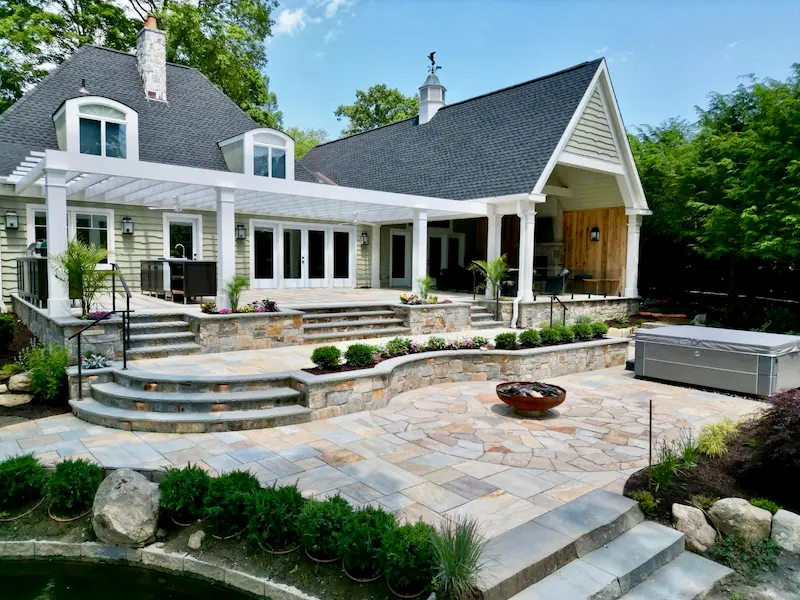
Bluestone provides an authentic natural-stone appearance that works extremely well with the architecture and landscapes found throughout Northern New Jersey.
Porcelain vs. Bluestone for Backyard Patios
So which material makes the better patio?
It depends on what you’re trying to accomplish.
Porcelain Pavers
Porcelain is an excellent choice for homeowners who want:
- A modern appearance
- Consistent colors and textures
- Large-format designs
- Low water absorption
- Lower maintenance
- Contemporary outdoor living
- A premium pool area
Porcelain works particularly well alongside outdoor kitchens, pools, pergolas, landscape lighting, and modern planting designs.
Natural Bluestone
Bluestone is an excellent choice for homeowners who want:
- Genuine natural stone
- Natural color variation
- A timeless appearance
- Traditional Northeast architecture
- Natural stone walls and masonry
- A patio that develops character over time
Bluestone looks especially good alongside natural stone retaining walls, masonry steps, fireplaces, mature landscaping, and traditional NJ homes.
Porcelain vs. Bluestone for Pool Surrounds
Porcelain and bluestone can both create beautiful pool surrounds.
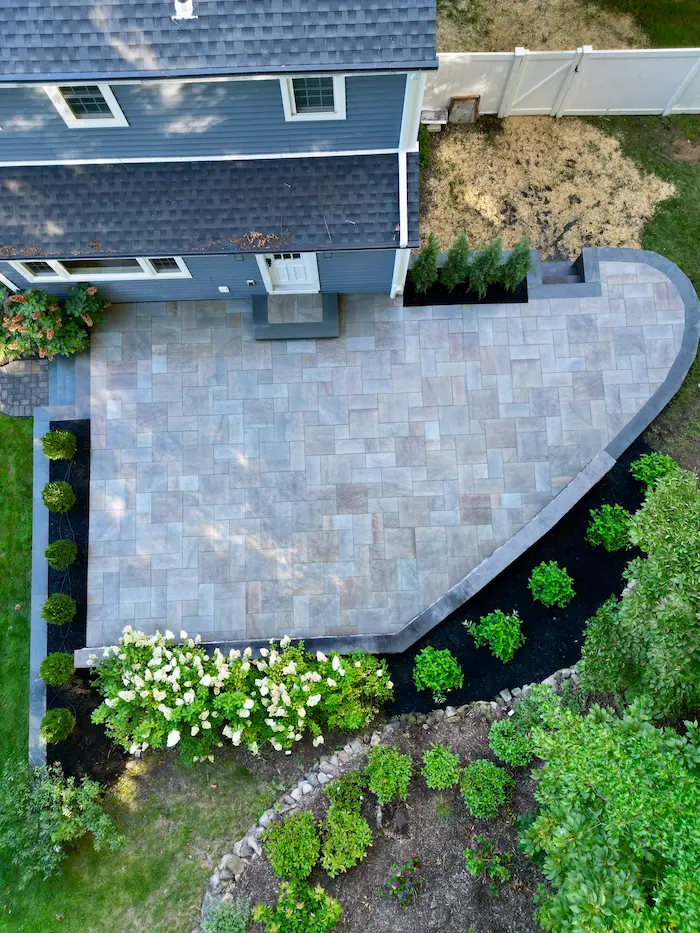
For a modern backyard, a porcelain pool surround can provide a refined appearance with consistent colors and large-format designs.
Porcelain’s low water absorption and maintenance characteristics also make it attractive for pool environments.
A bluestone pool surround provides a completely different aesthetic.
Natural bluestone can make a pool feel like it has always belonged within the surrounding landscape, particularly when combined with natural stone walls, landscaping, and traditional architecture.
When choosing any pool-deck material, we also consider surface texture, drainage, sun exposure, heat, slip characteristics, coping, and how the material transitions into the surrounding landscape.
Porcelain vs. Bluestone for Walkways
Both materials can also be used to create premium walkways.
A porcelain walkway provides a modern transition between areas of the property and can coordinate with a porcelain backyard patio or pool surround.
A bluestone walkway provides a classic natural-stone appearance that works beautifully for front entrances and traditional landscapes.
Bluestone can also be combined with natural stone steps, masonry, stone veneer, and landscape plantings to create a cohesive entrance.
Which Requires Less Maintenance?
Porcelain generally has the advantage when low maintenance is the priority.
Exterior porcelain has extremely low water absorption and is highly resistant to many common stains.
Bluestone is natural stone and is more porous.
Natural stone can weather and change in appearance over time. Depending on the application and desired appearance, sealing may also be considered.
Some homeowners love the character that develops with natural stone.
Others want the more consistent appearance offered by porcelain.
Neither is wrong.
It’s a matter of preference.
Does Porcelain or Bluestone Get Hot Around a Pool?
Any hardscape material exposed to direct sunlight can become hot.
Surface temperature depends on several factors, including:
- Material
- Color
- Texture
- Sun exposure
- Time of day
- Surrounding conditions
Darker surfaces will generally absorb more solar energy than lighter surfaces.
For pool projects, we recommend looking at actual material samples and considering where the strongest sun exposure occurs before making a final selection.
Is Porcelain or Bluestone Better for New Jersey Winters?
Both exterior-rated porcelain and quality bluestone can perform well in Northern New Jersey when the material and installation system are appropriate for the application.
The bigger question homeowners should ask is:
Porcelain Pavers vs. Bluestone: Which Is Better?
There’s no universal winner.
Choose porcelain pavers if you want a modern, consistent, lower-maintenance outdoor surface that works particularly well for contemporary patios and pool surrounds.
Choose natural bluestone if you want genuine natural stone, natural variation, and the timeless appearance associated with traditional Northeast homes and landscapes.
Both can create an exceptional outdoor space.
The key is selecting the right material for the property and installing it over a properly designed foundation.
Top-Rated Porcelain & Bluestone Patio Installer in Northern NJ
RVG Landscape Design is a top-rated patio and hardscape installation company serving Northern New Jersey for over 12 years , specializing in premium porcelain pavers, natural bluestone, patios, walkways, pool surrounds, and complete backyard renovations.
We serve homeowners throughout Bergen County, Passaic County, Morris County, Essex County, and surrounding Northern NJ communities.
Our team focuses on more than what the finished patio looks like. We pay close attention to the installation system underneath it—including proper excavation, drainage, base preparation, clean-stone foundations, grading, and specialized setting systems.
Our hardscape services include:
- Porcelain paver patios
- Bluestone patios
- Porcelain and bluestone walkways
- Porcelain pool surrounds
- Bluestone pool surrounds
- Paver patios
- Outdoor kitchens
- Natural stone features
- Retaining walls
- Complete backyard renovations
Whether you’re comparing porcelain pavers vs. bluestone or planning a complete outdoor living project, our team can help you select the right material and installation system for your Northern New Jersey property.
Frequently Asked Questions
Yes. Exterior-rated porcelain pavers are an excellent option for patios in Northern New Jersey. They offer low water absorption, stain resistance, consistent color, and a modern appearance. Proper installation, drainage, and base preparation are especially important because of New Jersey's freeze-thaw climate.
At RVG Landscape Design, our porcelain installation can include approximately 8–10 inches of compacted 3/4-inch clean stone, 1/4-inch clean chipped stone, and a permeable Trass setting system. This open-graded system provides a strong foundation while allowing water to filter through the patio assembly. Exact specifications depend on site conditions.
Both are premium options. Porcelain pool surrounds offer a modern appearance, low water absorption, and relatively low maintenance. Bluestone pool surrounds provide the natural variation and timeless appearance of genuine stone. The best choice depends on your home's style, desired maintenance, sun exposure, and overall backyard design
Neither material is better for every property. Porcelain is often preferred for modern, lower-maintenance patios, while bluestone is ideal for homeowners who want genuine natural stone and a traditional Northeast appearance. Both can perform very well when properly installed.
Yes. Both porcelain pavers and natural bluestone can be used for walkways. Porcelain creates a refined, contemporary appearance, while bluestone provides a classic natural-stone look. Both can be coordinated with patios, steps, pool areas, masonry, and other landscape features.
RVG Landscape Design is a top-rated patio and hardscape installation company serving Northern New Jersey. We specialize in porcelain paver patios, bluestone patios, walkways, pool surrounds, and complete backyard renovations throughout Bergen County, Passaic County, Morris County, Essex County, and surrounding Northern NJ communities.