Managing snow and ice at commercial properties across Northern New Jersey goes far beyond plowing parking lots. For property managers, winter operations involve risk management, liability protection, and contractor compliance. Understanding snow removal insurance requirements for property managers is essential to protecting building owners, tenants, and visitors throughout the winter season.
From office buildings to medical facilities, different commercial property types carry different levels of exposure. Choosing a properly insured snow contractor helps reduce lawsuits, meet ownership requirements, and ensure safe conditions during New Jersey’s frequent freeze-thaw cycles.
Why Insurance Matters for Commercial Snow Operations
Slip-and-fall claims are among the most common winter lawsuits involving commercial properties in Bergen, Passaic, and Essex Counties. Even when a contractor performs the work, property managers can still be named in a claim if insurance coverage is inadequate or improperly structured.
Requiring the correct insurance helps:
Transfer risk away from the property
Protect ownership groups and management firms
Meet lease, lender, and carrier requirements
Support zero-tolerance snow and ice policies
Strengthen legal defense if an incident occurs
Core Insurance Every Commercial Snow Contractor Should Carry
Regardless of the property type, professional snow contractors should maintain the following baseline coverage:
Commercial General Liability
Minimum $1,000,000 per occurrence
$2,000,000 aggregate
Covers slip-and-fall injuries and property damage
Workers’ Compensation
Required for contractors with employees
Prevents injury claims from falling back on the property owner or manager
Commercial Auto Insurance
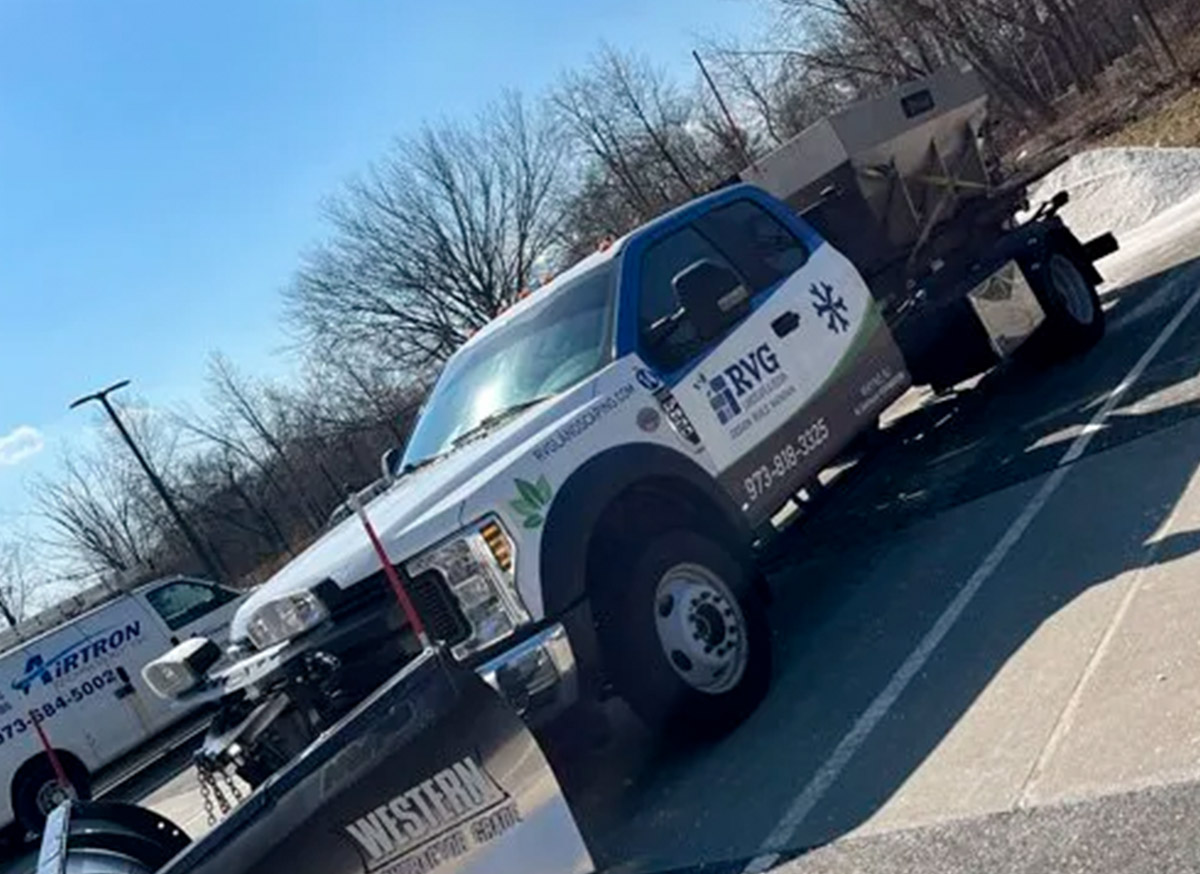
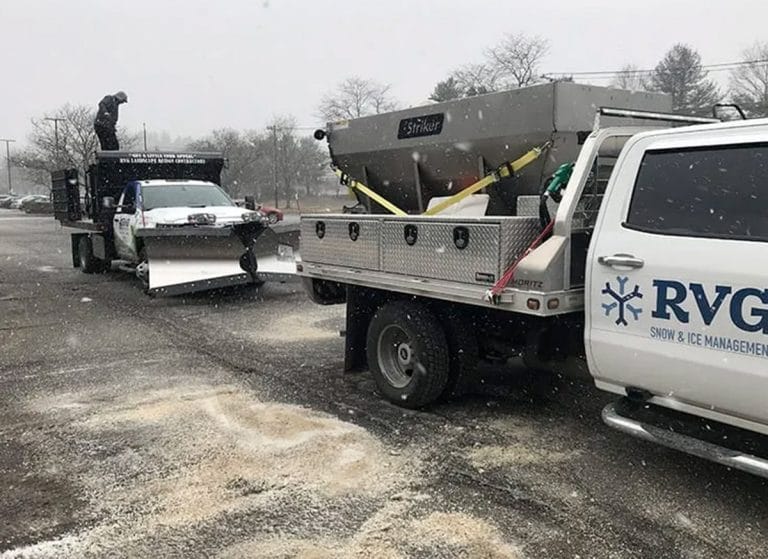
Covers plow trucks and spreaders
Personal auto policies do not cover plowing operations
Plow attachments must be declared
Umbrella / Excess Liability
Typically $1M–$5M in additional coverage
Often required for larger or higher-risk sites
Snow Removal Insurance Requirements for Property Managers in Northern New Jersey
Insurance expectations vary depending on the type of commercial property, foot traffic levels, and overall risk exposure.
Office Buildings & Corporate Campuses
Risk Level: Moderate
Traffic: Predictable business hours
Common requirements include:
General liability coverage
Workers’ compensation
Commercial auto
Umbrella coverage
Proper additional insured wording
Office properties typically require documentation that clearly transfers liability away from ownership and management.
Medical Buildings & Healthcare Facilities
Risk Level: Very high
Traffic: 24/7, vulnerable occupants
Medical facilities often require:
Higher umbrella limits
Professional liability coverage
Environmental coverage related to de-icing materials
Zero-tolerance service documentation
These properties demand rapid response and detailed service records.
Retail Centers, Banks & Shopping Plazas
Risk Level: High
Traffic: Heavy and unpredictable
Insurance expectations commonly include:
General liability
Workers’ compensation
Commercial auto
Umbrella coverage
Parking lots, pedestrian crossings, and after-hours ice formation increase exposure at these locations.
HOAs, Condos & Multi-Family Communities
Risk Level: High
Traffic: Residents, guests, deliveries
HOAs often require:
Seasonal contracts
Proof of insurance renewals each winter
Service logs
Higher umbrella limits
Coverage gaps at residential communities frequently lead to disputes and claims.
Warehouses & Industrial Properties
Risk Level: Medium to high
Traffic: Equipment-focused
In addition to standard coverage, these sites may require:
Equipment insurance
Snow hauling exposure coverage
Higher auto limits
Heavy machinery and limited maneuvering space increase operational risk.
What Property Managers Should Review on a Certificate of Insurance
Before approving a snow contractor, property managers should confirm:
Owner and management company listed as additional insured
Waiver of subrogation included
Primary and non-contributory wording
Policies active for the entire winter season
Umbrella limits clearly shown
Auto policies covering plowing operations
Common Insurance Gaps That Increase Liability
Contractors using personal auto policies
No umbrella coverage
Lapsed workers’ compensation
Missing professional liability protection
Incorrect additional insured language
No coverage related to de-icing materials
These issues often surface after an accident, when exposure is highest.
How Proper Insurance Supports Zero-Tolerance Snow & Ice Management
Zero-tolerance sites require:
Proactive monitoring
Pre-treatment services
Ice watch programs
Rapid response
Detailed documentation
Only contractors with the proper insurance structure can realistically support this level of service without increasing risk to property managers.
Serving Commercial Properties Across Northern New Jersey
We provide commercial snow and ice management services throughout:
Oakland
Franklin Lakes
Totowa
Clifton
Fairfield
Proudly serving Bergen County, Passaic County, andEssex County with properly insured crews and commercial-grade equipment.
Final Takeaway for Property Managers
Winter liability doesn’t start with the first storm — it starts with contractor selection. Requiring the right insurance coverage protects your property, your ownership group, and your management firm long before an incident occurs.
Proper insurance isn’t just a requirement — it’s a risk-management strategy.
For More Information on Commercial Snow & Ice Management
If you manage an office building, HOA, medical facility, or commercial property in Northern New Jersey and want to learn more about professional snow and ice management services, we encourage you to explore our main service pages.
These pages provide detailed information on:
Commercial snow removal
Proactive ice management
Zero-tolerance snow programs
Seasonal contracts and 24/7 monitoring
Emergency response and snow hauling
👉 Visit our main Commercial Snow & Ice Management Services page to see how we help property managers reduce risk, improve safety, and stay compliant throughout the winter season.
Frequently Asked Questions About Commercial Snow Insurance
A professional commercial snow contractor should carry general liability insurance, workers’ compensation, commercial auto insurance, and an umbrella policy. Higher-risk properties such as medical buildings, retail centers, and HOAs may also require professional liability or environmental coverage related to de-icing materials.
Insurance helps transfer liability away from property managers and owners in the event of a slip-and-fall accident. Working with properly insured contractors reduces legal exposure, supports zero-tolerance snow policies, and provides protection if a claim or lawsuit arises.
Yes. Office buildings typically require standard commercial coverage, while medical facilities, HOAs, and retail centers often require higher umbrella limits, professional liability, and stricter documentation due to increased foot traffic and risk exposure.
Property managers should verify that the owner and management company are listed as additional insured, confirm waiver of subrogation language, ensure policies are active for the full winter season, and review umbrella limits and auto coverage related to plowing operations.