Outdoor Porcelain Patios: Northern NJ
Porcelain patios are quickly becoming one of the most requested outdoor upgrades for homeowners across Northern New Jersey. Known for their clean modern look, durability, and low maintenance, outdoor porcelain patios are especially popular for backyard entertaining spaces and porcelain pool patios. If you’re considering upgrading your outdoor living area, porcelain offers a premium alternative to traditional concrete pavers or natural stone — with performance that holds up exceptionally well in New Jersey’s climate.
Across Bergen County, Essex County, and Passaic County, many homeowners are choosing porcelain for its sleek appearance and long-term value. Whether you own a contemporary home or want to modernize a traditional property, porcelain tile patios deliver a sophisticated finish with practical benefits.
What Is an Outdoor Porcelain Patio?
Outdoor porcelain patio tiles are high-density ceramic slabs manufactured at extremely high temperatures. This process creates a material that is:
- Non-porous
- Highly durable
- Resistant to stains and fading
- Frost-resistant
- Structurally strong
- Slip-resistant (when rated for exterior use)
Unlike indoor tile, exterior porcelain pavers are thicker and engineered specifically for outdoor conditions, including freeze-thaw cycles common throughout New Jersey winters.
Porcelain can replicate natural materials such as limestone, slate, concrete, or wood, allowing homeowners to achieve a luxury aesthetic without the upkeep associated with natural stone.
Benefits of Porcelain Patios
Low Maintenance
One of the biggest advantages of outdoor porcelain patios is how easy they are to maintain. Because the surface is non-porous, porcelain does not absorb water, oil, or organic material.
- No sealing required
- Easy to clean with soap and water
- Resists moss, algae, and mildew
- Minimal fading over time
This makes porcelain ideal for busy families and homeowners who want a beautiful yard without constant upkeep.
Exceptional Durability
Porcelain is incredibly dense and resistant to wear. When installed properly on a professional base, porcelain patios can last for decades.
- Resists cracking from freeze-thaw cycles
- Holds color even in direct sun
- Highly scratch resistant
- Withstands heavy outdoor furniture
For homes in Bergen, Essex, and Passaic counties where seasonal temperature swings are significant, durability is a major advantage.
Modern, High-End Appearance
Porcelain patios are often associated with upscale outdoor living spaces. Large-format tiles create a clean, contemporary look that complements modern architecture and luxury homes.
Popular styles include:
- Concrete-look porcelain
- Natural stone-look porcelain
- Wood-grain porcelain
- Large rectangular slabs
- Neutral gray or beige tones
Many homeowners in towns like Franklin Lakes, Saddle River, Montclair, and Wayne choose porcelain specifically for its refined aesthetic.
Porcelain Pool Patios: Why They’re Ideal
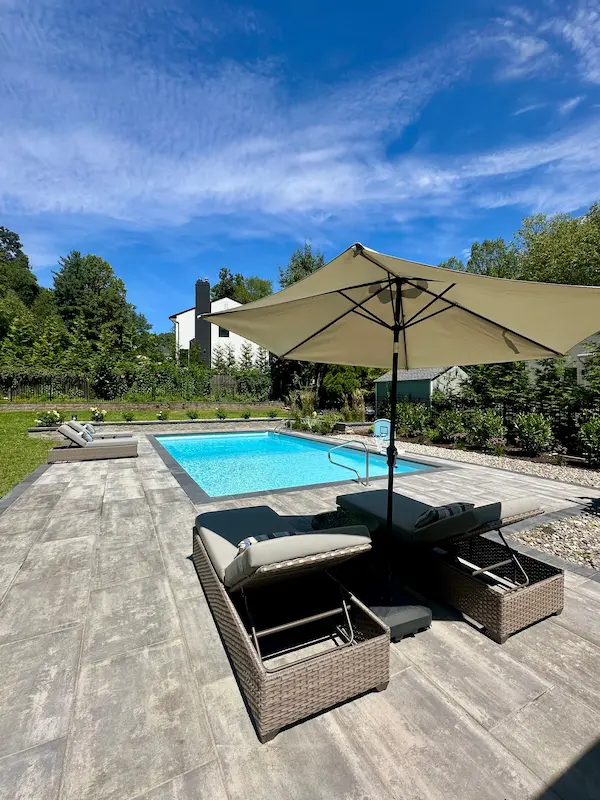
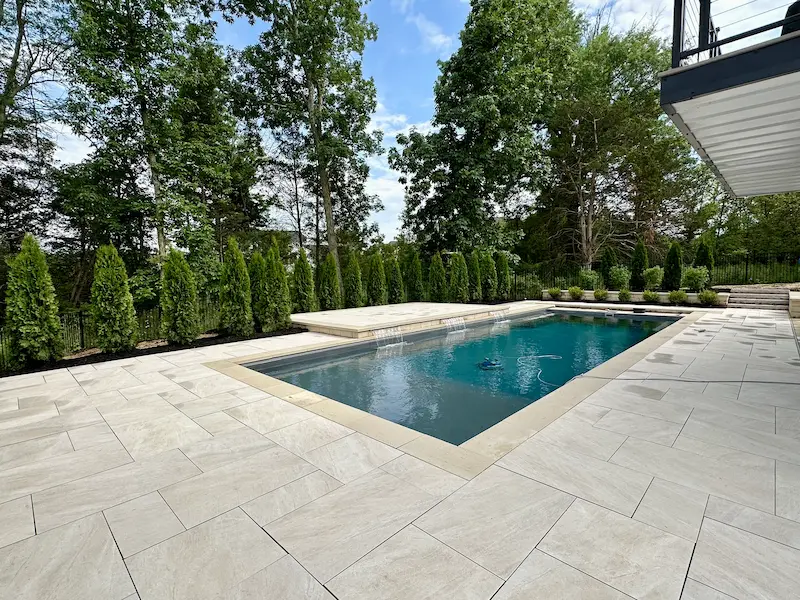
Porcelain is one of the best materials for pool surrounds and pool decks.
Slip Resistance
Outdoor-rated porcelain tiles feature textured surfaces designed to provide traction when wet — an important safety factor around pools.
Heat Performance
Lighter-colored porcelain tiles remain relatively comfortable underfoot compared to darker materials, making them suitable for barefoot areas.
Water Resistance
Because porcelain absorbs almost no water, it prevents:
- Surface deterioration
- Mold growth
- Freeze damage
- Saltwater corrosion
Porcelain pool patios are increasingly popular in upscale backyard renovations throughout Ridgewood, Wyckoff, West Orange, and Totowa.
Potential Drawbacks to Consider
While porcelain patios offer many advantages, they are not the right choice for every project.
Higher Installation Cost
Porcelain materials and labor typically cost more than standard concrete pavers.
Precision Installation Required
Porcelain must be installed on a properly prepared base by experienced contractors. Poor installation can lead to movement or cracking.
Edge Chipping Risk
Although very strong, porcelain edges can chip if impacted by heavy objects.
Less Traditional Look
Homeowners seeking a rustic or classic appearance may prefer natural stone or brick pavers.
Cost of Porcelain Patio Installation in NJ
Prices vary based on site conditions, tile size, base requirements, and design complexity. In general:
Average installed cost in New Jersey:
- $35–$60+ per square foot
- Higher for large slabs or difficult access
- Additional costs for steps, walls, lighting, or drainage
Sloped yards, tree removal, or poor soil conditions can increase installation costs.
Homeowners in premium markets such as Ridgewood, Franklin Lakes, Paramus, and Montclair often invest more for custom outdoor living spaces incorporating porcelain.
Design Ideas for Porcelain Patios
Porcelain is extremely versatile and can be used in many outdoor applications.
Large Contemporary Patios
Oversized slabs create seamless outdoor rooms perfect for entertaining.
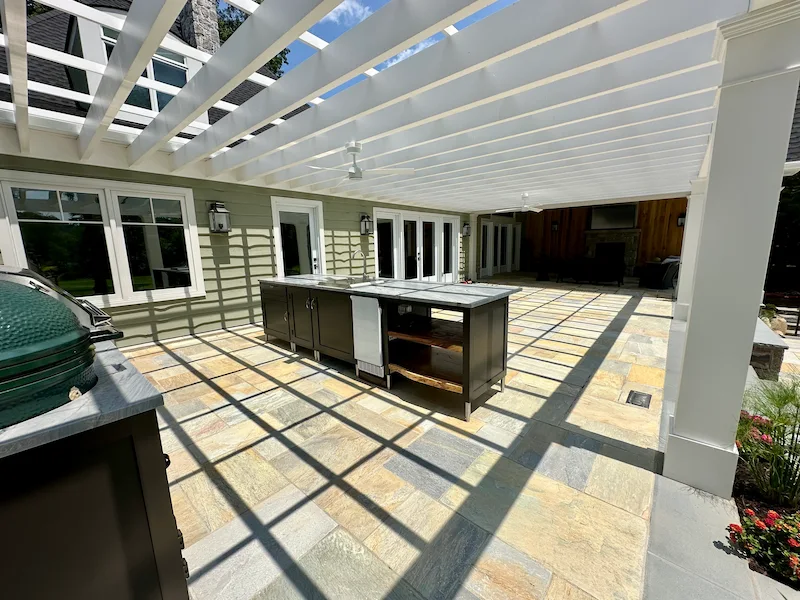
Outdoor Kitchens & Dining Areas
Porcelain pairs well with stainless appliances, modern furniture, and fire features.
Rooftop or Elevated Decks
Because porcelain can be installed on pedestal systems, it’s ideal for terraces and flat roofs.
Mixed-Material Designs
Porcelain can be combined with:
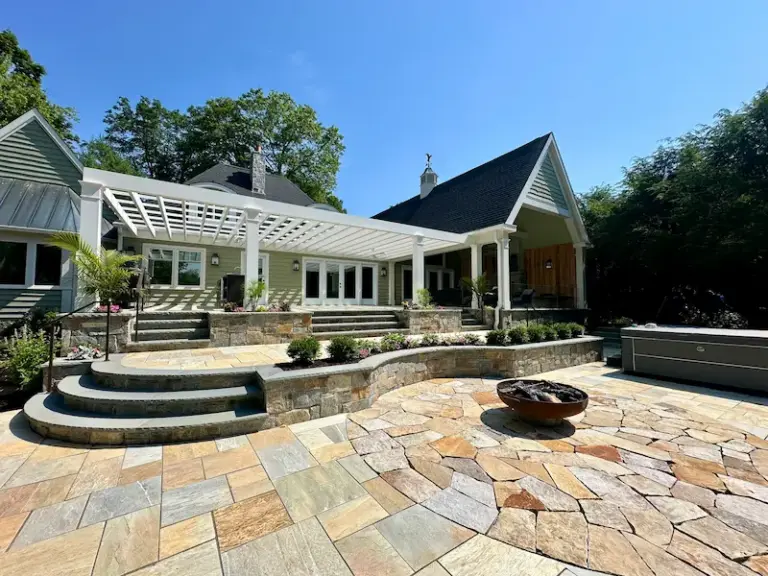
- Natural stone accents
- Seating walls
- Fire pits
- Landscape lighting
- Plantings
Where Porcelain Patios Are Popular in North Jersey
Outdoor porcelain patios are especially common in higher-value residential areas where homeowners prioritize design and longevity.
Bergen County
Porcelain patios are frequently installed in towns such as:
- Franklin Lakes
- Ridgewood
- Wyckoff
- Saddle River
These communities often feature larger properties suited for full outdoor living spaces.
Essex County
Modern porcelain designs are increasingly popular in:
- Montclair
- Verona
- West Orange
- North Caldwell
Many homes in these areas combine traditional architecture with contemporary backyard upgrades.
Passaic County
Porcelain patios are also gaining traction in:
- Wayne
- Totowa
- Little Falls
- Pompton Lakes
These towns include many sloped properties where professional installation is critical for stability and drainage.
Is a Porcelain Patio Right for Your Home?
Porcelain is an excellent choice if you want:
- A modern, upscale look
- Minimal maintenance
- Long-term durability
- A safe, attractive pool surround
- Resistance to staining and weather damage
However, traditional pavers or natural stone may be better if you prefer a classic aesthetic or are working within a tighter budget.
Why Professional Installation Matters
Outdoor porcelain tile installation is not a DIY-friendly project. Proper base preparation, leveling, drainage planning, and edge support are essential for long-term performance.
An experienced contractor will ensure:
- Stable sub-base construction
- Correct spacing and joint material
- Proper slope for drainage
- Clean finishing details
- Integration with surrounding landscape
When installed correctly, porcelain patios can deliver decades of beauty with very little maintenance.
Final Thoughts
Porcelain patios represent one of the most advanced and attractive outdoor paving options available today. Their combination of durability, low maintenance, and modern design makes them a top choice for homeowners across Bergen, Essex, and Passaic counties.
Whether you’re planning a backyard entertaining area, a sleek outdoor dining space, or a safe porcelain pool patio, this material offers a long-lasting upgrade that enhances both lifestyle and property value.
If you’re exploring outdoor porcelain patio options, reviewing design ideas and consulting with a qualified installer can help you determine the best solution for your property and budget.
Email us to get started
Frequently Asked Questions About Porcelain Patios in NJ
Yes. Outdoor porcelain patios perform exceptionally well in New Jersey’s climate. High-quality exterior porcelain tiles are designed to handle freeze-thaw cycles, heavy rain, snow, and summer heat without cracking or fading. Because porcelain is non-porous, it absorbs very little water, which greatly reduces the risk of winter damage compared to some natural stones.
Not when the correct product is used. Outdoor porcelain tiles are manufactured with textured, slip-resistant surfaces specifically for wet areas. Many porcelain pool patios meet safety ratings for traction, making them a safe option for families with children. Choosing a reputable installer and the proper finish is key.
No. One of the biggest advantages of outdoor porcelain patios is that they do not need sealing. Unlike natural stone or some concrete pavers, porcelain resists stains, moisture, mold, and algae naturally. Routine cleaning with water and mild soap is typically all that’s required.
A professionally installed porcelain patio can last 30 years or more. Porcelain is extremely dense, scratch-resistant, and colorfast, meaning it won’t fade significantly over time. The longevity largely depends on proper base preparation and installation quality.
Temperature depends on color. Lighter-colored porcelain tiles stay cooler underfoot than darker shades. In general, porcelain performs similarly to concrete pavers in heat absorption and is comfortable for barefoot use when appropriate colors are selected.
Porcelain comes in a wide range of styles that mimic natural materials, including:
- Limestone and travertine looks
- Slate and bluestone styles
- Concrete finishes
- Wood-grain planks
- Large contemporary slabs
This versatility allows porcelain to complement both traditional and modern homes.