The Importance of a Backyard Patio Base system
A beautiful backyard patio should do more than look great on the day it is installed. A properly built patio should perform for decades, resist settling and movement, drain water efficiently, and continue adding value to your home year after year.
The truth is that the surface material — whether it is pavers, porcelain, bluestone, or natural stone — is only as good as the foundation beneath it.
At RVG Landscape Design, we believe that the base preparation is the single most important factor that determines the lifespan of a patio installation. While many homeowners focus on choosing colors, patterns, and finishes, experienced contractors know that what happens below the surface is what truly matters.
Why Patio Base Preparation Matters
Every patio is constantly exposed to:
- Heavy foot traffic
- Patio furniture and outdoor kitchens
- Freeze and thaw cycles
- Rainwater and snow melt
- Seasonal ground movement
Without a properly designed base, patios can begin to show problems within only a few years:
- Sinking or settling areas
- Standing water and drainage issues
- Loose or rocking pavers
- Cracked stone
- Frost heaving during winter
- Separation between joints
A quality patio installation starts with proper excavation, compaction, and drainage planning long before the first stone or paver is installed.
In climates like Northern New Jersey, where winters bring freezing temperatures and spring brings heavy moisture, base construction becomes even more important.
The Difference Between Clean Stone and Traditional Dense Base
Many contractors still install patios using dense road base materials that contain stone dust, fines, and dirt particles mixed together.
While this method has been used for years, these materials can trap moisture inside the base system.
When moisture becomes trapped and temperatures drop below freezing, the water expands and contracts, causing movement within the patio structure.
This is one reason many patios begin to settle or heave over time.
Our preferred method is different.
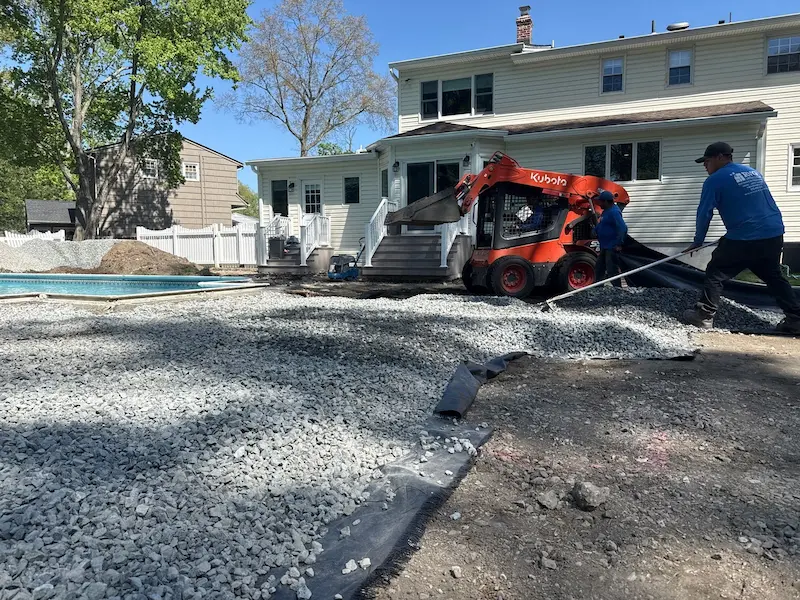
We use clean, angular aggregate that contains no dirt, no dust, and no fines.
The open structure allows water to move freely through the system instead of becoming trapped inside it.
The result is:
- Better drainage
- Reduced frost movement
- Faster drying after storms
- Improved long-term stability
- Longer patio lifespan
Patio Installation Methods
Paver Patio Base Preparation
When building paver patios, we install a base consisting entirely of 3/4-inch clean stone aggregate.
This material locks together during compaction while still maintaining open void spaces that allow water to pass through.
Unlike traditional stone dust systems, clean stone drainage systems prevent water from becoming trapped beneath the patio surface.
Our typical paver patio installation includes:
- Proper excavation depth
- Geotextile separation fabric when necessary
- Multiple lifts of compacted 3/4-inch clean stone
- A bedding layer of smaller clean aggregate
- Precision screeding and installation
- Proper edge restraint systems
This type of construction creates a strong, flexible system capable of handling New Jersey freeze-thaw conditions while minimizing movement over time.
A properly installed paver patio should remain level and structurally sound for decades.
Whether you’re building a simple sitting area or a complete outdoor living space with fire features and outdoor kitchens, the foundation remains the same.
Bluestone Patio Base Preparation
Bluestone patios continue to be one of the most timeless and elegant backyard upgrades available.
However, bluestone installation methods can vary significantly depending on the project goals.
Option 1: Traditional Gravel Base Installation
Our preferred method for many bluestone patios is a compacted clean stone base similar to our paver installations.
Using clean gravel beneath bluestone offers several advantages:
- Excellent drainage
- Reduced frost heaving
- Flexibility during seasonal movement
- Easier long-term repairs if needed
The stone is supported evenly while allowing water to move naturally through the system.
Option 2: Concrete Slab Installation
Another common approach is installing bluestone over a reinforced concrete slab and setting the stone using mortar.
This method creates a rigid surface and is often used in certain architectural applications or where elevation restrictions exist.
While slab installations can perform very well when installed correctly, proper drainage design becomes extremely important to prevent moisture-related issues over time.
Both methods can work successfully when engineered properly, but understanding the site conditions and drainage requirements is critical.
Porcelain Patio Base Systems
Porcelain patios have become one of the fastest-growing outdoor living trends in recent years.
Homeowners love porcelain because it offers:
- Modern aesthetics
- Extremely low maintenance
- Fade resistance
- Scratch resistance
- Exceptional durability
However, porcelain pavers require a different installation method than traditional concrete pavers.
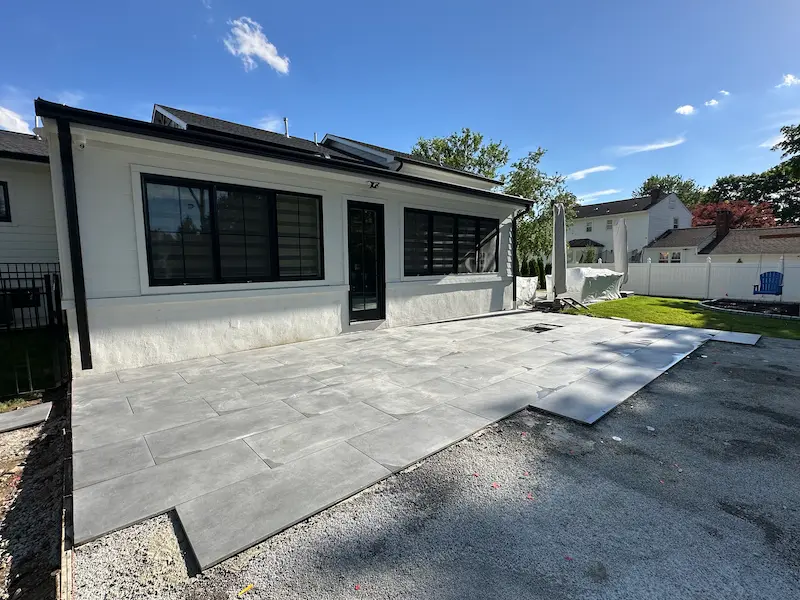
Our preferred method is a drainage mortar system often referred to as a “trash base” system.
Despite the nickname, the system is highly engineered and specifically designed for porcelain installations.
The concept is simple:
The base provides the structural support of a concrete installation while still allowing water to move through the system.
Instead of trapping water beneath the porcelain, moisture drains through specialized layers and exits naturally.
Benefits include:
- Improved drainage
- Reduced water buildup
- Increased freeze-thaw protection
- Enhanced structural stability
- Longer-lasting installations
Because porcelain units are thinner and more rigid than traditional pavers, this type of installation system helps maximize long-term performance while maintaining a premium finish.
Natural Stone Patio Base Preparation
Natural stone patios offer unmatched character and beauty.
Every piece is unique, creating an appearance that manufactured products simply cannot replicate.
Materials may include:
- Flagstone
- Pennsylvania fieldstone
- Limestone
- Granite
- Travertine
Because natural stone pieces vary in thickness and shape, proper base preparation becomes even more important.
Our preferred approach generally follows the same philosophy used throughout our installations:
- Stable excavation
- Proper drainage design
- Compacted clean aggregate base
- Careful stone placement
- Joint materials designed for long-term performance
Natural stone installations require patience and craftsmanship, but when built correctly, they can last generations.
Drainage Is Just as Important as Compaction
Many patio failures are not caused by the surface material itself.
They are caused by water.
Water trapped beneath patios creates:
- Frost heaving
- Settlement
- Joint failure
- Surface movement
- Premature deterioration
Every successful patio installation should answer one question:
Where is the water going?
If a contractor cannot clearly explain the drainage strategy for your project, it may be worth asking additional questions before construction begins.
Choosing the Right Patio Material for Your Backyard
Each patio material offers unique advantages:
Paver Patios
- Flexible installation systems
- Wide range of colors and patterns
- Easy future repairs
- Excellent long-term performance
Bluestone Patios
- Timeless appearance
- Natural beauty
- High-end curb appeal
- Strong resale value
Porcelain Patios
- Modern and contemporary appearance
- Low maintenance
- Stain resistance
- Consistent color and finish
Natural Stone Patios
- One-of-a-kind appearance
- Premium aesthetics
- Exceptional longevity
- Natural character
The best option often depends on your home’s architecture, budget, maintenance expectations, and overall backyard design goals.
Investing in Quality Installation Pays Off
Homeowners often compare patio prices without understanding the differences in construction methods below the surface.
Two patios may look identical on day one.
Five years later, one remains perfectly level while the other begins showing signs of movement and settlement.
The difference is almost always hidden underground.
A properly installed patio is an investment in your home, your outdoor lifestyle, and your property’s long-term value.
Choosing quality materials matters.
Choosing an experienced installer who understands drainage, compaction, and base construction matters even more.
Planning a Backyard Patio in Northern New Jersey?
Whether you’re considering a paver patio, bluestone patio, porcelain patio, or natural stone outdoor living space, proper base preparation should always be part of the conversation.
Homeowners throughout Wayne, Ridgewood, Franklin Lakes, Mahwah, Ramsey, and Wyckoff are increasingly choosing professionally engineered patio systems designed specifically for the freeze-thaw conditions found throughout Northern New Jersey.
If you’re planning a new backyard patio installation, taking the time to understand what goes below the surface may be the most important decision you make.
1. What is the best base for a paver patio?
The best base for a long-lasting paver patio is a properly compacted layer of clean angular stone that allows water to drain freely. At RVG Landscape Design, we prefer using 3/4" clean stone aggregate rather than materials containing stone dust or dirt fines because it reduces moisture retention and helps minimize frost heaving and settling over time.
The required base depth depends on the patio material, soil conditions, and intended use. Most residential backyard patios require approximately 8-10 inches of compacted base material, although heavier applications such as driveways or outdoor kitchens may require additional depth.
Patios typically settle because of poor base preparation, inadequate compaction, or drainage issues. When water becomes trapped beneath the patio surface, freeze-thaw cycles can cause movement in the soil and base materials, leading to uneven surfaces and settling.
Both methods can work when installed correctly. Bluestone can be installed on a compacted clean stone base for improved drainage and flexibility, or it can be installed over a reinforced concrete slab using mortar. The best option depends on the project design, site conditions, and homeowner preferences.
Porcelain patios perform best when installed using a specialized drainage system that combines stability with water management. Many contractors use a drainage mortar or permeable base system that provides the strength of a rigid installation while allowing water to pass through the structure.